Showing posts with label home schooling. Show all posts

Sunday, July 10, 2016

Lists

We have now finished our Big Trip.  What a year it has been!  And what amazing experiences we have had in so many countries.  Here is a sample:

Countries in which we have had bugs and infections:
  • Thailand - ants crawling across my head while sleeping on a mat on the floor at a homestay in the hills above Chiang Mai
  • Thailand - leech sucking my blood
  • Thailand - Mira had a bad stomach bug
  • Indonesia - I caught Mira's stomach bug
  • Indonesia - lice, which everyone but Rob got them
  • Indonesia - Rob had bedbugs
  • Cambodia - Rob and Maya had a little stomach bug
  • Palau - poisonous tree got Maya good (like poison ivy but worse)
  • India - Rob had mites with super long antennas in his underarm
  • India - Maya had a cold or flu
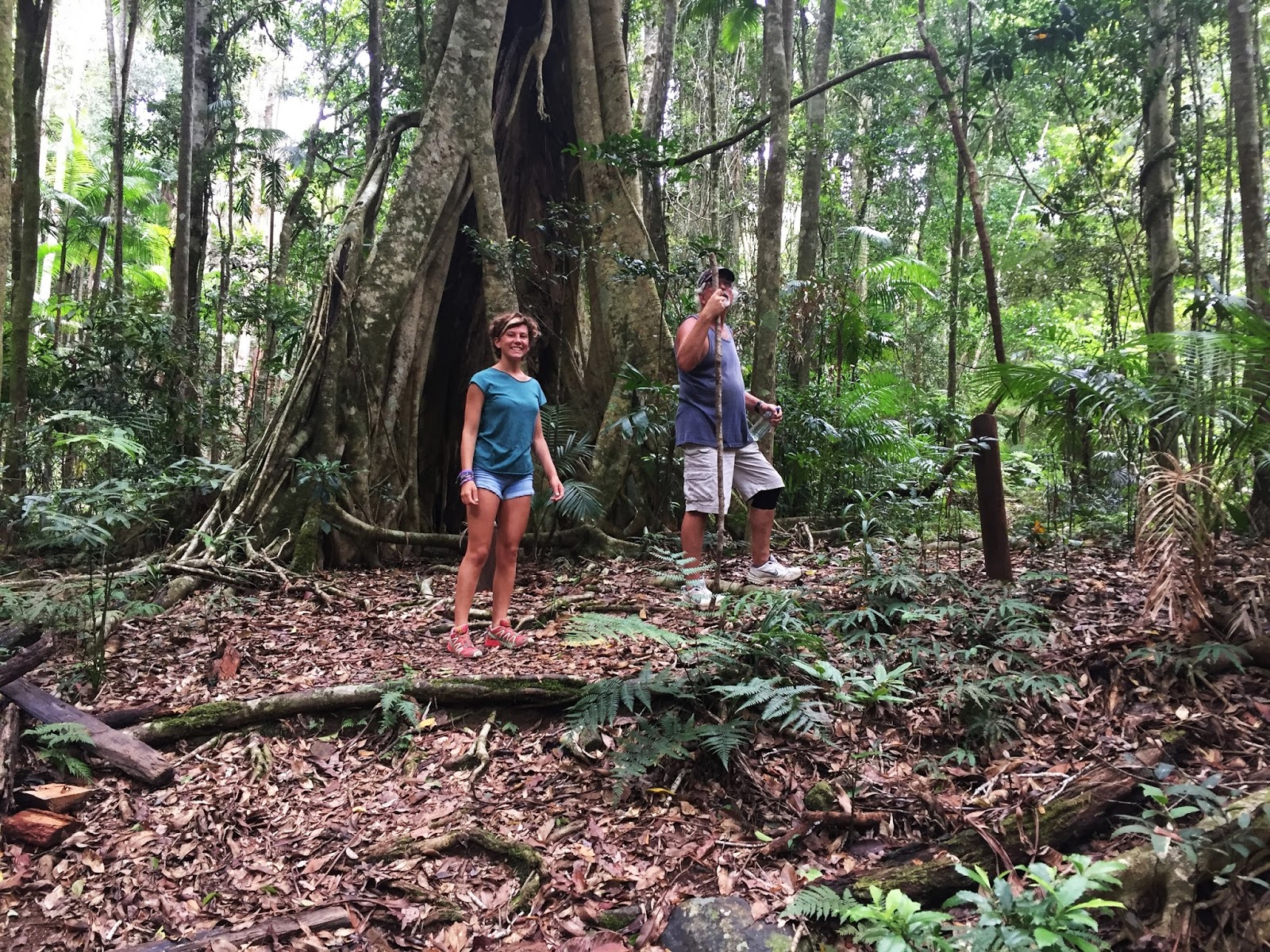
  • Australia - we all had leeches sucking our blood
  • California - Mira and I had bedbugs
Maya's legs after toughing beautiful Palau's ugly poisonous trees


Countries in which we ate insects:
  • Thailand
  • Laos
  • Cambodia
  • Mexico


Countries in which I saw friends (and location of where we first met that friend):
  • Thailand - Billy, Kathy, and Khalid (Louisiana and UAE)
  • Thailand - Dino and Helen (Rhode Island)
  • Indonesia - Denise, Jay, Charlotte, and Jimmy (Rhode Island)
  • Singapore - Ann, Michael, Demitri, and Thani (Rhode Island)
  • India - Tony, Alicia, and Fran (Rhode Island)
  • Bhutan - Nabil and Violet (Louisiana and UAE)
  • Myanmar - Josh, Zoe, and Zack (Jordan)
  • Myanmar - Jill and Roni (Jordan)
  • Cambodia - Matt and Sheila (California)
  • Vietnam - Reed and Ryder (Jordan)
  • Australia - Megan (Canada)
  • Australia - Dianne, Zekele, and Lindy (Zimbabwe)
  • Australia - Mandy (Washington)
  • Australia - Carolan, Tim, and Kirra (California)
  • Australia - Lesley (UAE)
  • Australia - Denise (Eritrea)
  • New Zealand - Helle and Warwick (Eritrea)
  • New Zealand - Liz (Eritrea)
  • Samoa - Cedric and Suzy (Massachusetts and Fiji)
  • Chile - Inaki and Meritxell (Eritrea and New York)
  • Mexico - Kathy (California)
  • Mexico - Holly (Washington)
  • Mexico - Jeanne (Zimbabwe)
  • Mexico - Lisa (Jordan)
  • Mexico - Jane (Rhode Island)
  • Mexico - Lessie (Mexico)
  • Hawaii - Matt and Sheila (California and Zimbabwe)
  • Hawaii - Paz (Rhode Island)
  • California - Sandy, Anneke, and Marijke (Canada)
  • California - Kathy (California)
  • California - Edie, Jimmy, Mimi, Cici, and Tia (UAE and California)
  • California - the Marsocci clan (Rhode Island)
  • California - Laura (Washington)
  • California - Dave (France)
  • California - Dom and Joao (Rhode Island)
  • Arizona - Kamal, Alia, Saif, and Azza (Egypt)

How to say hello and thank you in the 19 countries we visited (and Hawaii):
  • UAE:  marhaba, shukran 
  • Thai: swadi ka, kap kun ka 
  • Laos: sawadi, kap chai
  • Indonesian: slamat pagi tremakasi
  • Philippines:  kamusta , salamat po
  • Palau: alli alli, sulong 
  • India: namaste, dhandivad 
  • Bhutan: kuzuzangpola, karinchey
  • Myanmar: maklava  , chezutamari 
  • Cambodia: Suwa sudeh, awkun 
  • Vietnam: Sin chao, com an
  • Australia: G'dai, cheers or ta 
  • New Zealand: hello, thanks or ta 
  • Samoa: talofa, fa'afetai
  • Santiago: hola; gracias 
  • Easter Island: iorana; maururu 
  • Mexico: hola; gracias 
  • Hawaii: aloha, mahalo
Nadia


Tuesday, June 28, 2016

Do Overs?

We are now exactly one year and six days into our one-year around-the-world trip, for which we quit our jobs, jumped off the cliff, home schooled our children, and traveled to 19 countries around the world.

We are about to fly to Rhode Island, where we typically spend our summer vacation with family and friends.  After that, we will move to Myanmar and get on with our "regular" lives of living in a foreign country doing humanitarian and development work and attending international schools.

As I reflect on our trip, and think about the big picture, and as we visit friends here in Southern California, I think about what I would do differently, if we were to start the trip over again.

I would:

1.  Go slower and visit fewer places.  Upon the advice of people who had already taken similar trips, we revised our trip itinerary several times, slowing it, and reducing the number of countries and places we planned to visit.  

I still think, however, that we planned too much and didn't allow enough down time.  

I would go at a much a slower pace.  Visit fewer countries.  See fewer sights.  I would plan more "rest stops".  I would allow time for us to just be in a city or town or village, to experience life in different places.  I would allow more time for processing all that we say and all that we did.  Time to just "be".

The Cara Mia off Catalina Island, where we spent four days with my childhood friend, Edie, on her gorgeous sailboat, lounging and catching up - a perfect "rest stop" on our Big Trip.

2.  Take school less seriously.  Except for math, we didn't need to take schooling so seriously.  As long as they were reading regularly, and writing regularly, the girls didn't need as much formal schooling as we did.  They learned so, so much from everything we did and saw.  By osmosis.  By doing.  By experiencing.  By participating in the planning.  By asking questions of our guides and our new friends and acquaintances.  By seeing and experiencing and becoming so accepting of so many diverse foods and ecosystems and people and clothes and cultures and religions and lifestyles and values.  There are so many ways to do things and the "other" is also "right".  This is what it means to be an world citizen.

3.  Take strong, well-made roller suitcases instead of backpacks.  There were very, very few instances in which we actually needed backpacks.  We always checked bags when flying (because we had toothpaste and shampoo and first aid gels, etc., etc.,  which exceeded the liquid limits found everywhere with carry-on bags).  And there were many time in which we would have had a much easier time (less sweat) had we pulled along a small suitcase with wheels.  We didn't need to "prove" we were travelers by carrying backpacks instead of suitcases.

4.  Plan side trips with part of the family, in various configurations, to separate from time to time.  Maya and I took a trip on our own at the beginning of the trip.  We left Mira with family friends at the end of our trip.  I took three different week-long trips on my own during our Big Trip.  Rob went off for a long boys' weekend for four days at one point while we were in Mexico.  These were fantastic breaks, but we should have planned time for more little side trips with two of us going in one direction while the other two went in another while we were on our Big Trip.  One year is a long time to be together 24 hours-a-day, seven days a week, for one year.

Photos of Rob and I during a rare four-hour period of being away from the kids while at the San Diego County Fair in Del Mar, California, USA

All in all, it has been an absolutely fantastic year!  We have learned a lot about ourselves, about each other, and about our relationships with each other.  But I'd do things slightly differently if I were doing it over again.  If I was making recommendations to other families wanting to take a similar trip, I'd suggest they do things a little differently than we did it.

None-the-less, I would absolutely recommend a trip like this to anyone and everyone.  Life is fragile and short.  You might not be here tomorrow.  Take a leave-of-absence.  Take a sabbatical.  Quit your jobs.  Travel with your kids for a fair length of time while they're old enough to remember the trip.  Take a risk.  Do it.  Experience new things.  Create memories.  Spend time with loved ones.  Carpe diem!

-  Nadia

Monday, March 21, 2016

Free and Equal

Despite evidence to the contrary all over the world, I strongly believe that every person is born free and equal in dignity and rights.

First part of the Universal Declaration of Human Rights, on the wall of the Museum of Memory and Human Rights in Santiago, Chile

In Chile, Augusto Pinochet ruled ruthlessly for almost twenty years.  Thousands of people disappeared.

Photographs of some of the many people "disappeared" during the Pinochet regime

Free speech and opposition to the regime were not allowed.  Art was used widely as a medium for expressing truth.

Traditional Chilean appliqué produced during the 1970's

The president's regime was overthrown by popular vote.  The opposition campaign, which won overwhelmingly, focused on the positive, was very upbeat, and asked people to vote "no" for an extension of the presidential term.

Photograph by Alfredo Jaar, of a billboard from the opposition campaign, asking "are you happy?"

Today, Chile is colorful and hopeful.

The girls in Valparaiso, Chile, sitting in front of a couple of the extremely common murals 

And many Chileans have learned from the past.

A typical weekend city park poster asking us not to forget about the missing Mexican university students.  

If only everyone would respect human rights and give peace a chance... the world would be a better place.  Spread the word.  Open your eyes.  Do what you can.

Nadia

Monday, February 15, 2016

Urban vs Rural

Because it is the middle of February (already), we are actively talking about our next posting.  To which country will we move in July or August?  Where do we want to live?  What sort of city or town would be our ideal?

I don't know the answer to that question.

Today is our last day in Australia.  We explored the cities of Melbourne, Hobart, and Sydney.  We relaxed in the smaller towns of Torquay, Pambula, and Coffs Harbor.  We trekked and hiked trails in Tasmania.  We had time in urban, rural, and natural settings.

Each has its advantages.

I love the politics and the uber cool, artsy things in big cities.

Hobart protest about refugee treatment by the Australian government

I love the community and friendliness of smaller cities and towns.

Morning visitors in Pambula garden

I love the outdoors and active lifestyle of natural settings.

Coastal hike in Port Arthur

Whatever happens, I do know that the sea must be nearby and nature must be accessible.

We shall see where we end up...

Nadia

Sunday, February 7, 2016

Luxury in Australia

"It is a luxury to do something that serves no practical purpose: the luxury of civilization!"
   The Light Between Oceans by M.L. Steadman


Luxury:  swinging on a rope swing above Coffs Creek

Luxury: surfing at Park Beach on a weekday

Luxury: hiking Coffs rainforest with a friend

Luxury: rescuing and caring for orphaned or abused animals

Practical:  doing school work to learn and grow
Luxury:  doing school work in a lounge chair by a river in Tasmania

Luxury:  hiking with your family in Cradle Mountain National Park

Practical:  transporting family from one lodging to another
Luxury:  transporting your lodging (camper van) from one national park to another

Luxury:  sitting at a view point on top of Cradle Mountain

Practical:  washing sweat off your body
Luxury:  bathing in Crater Lake

Yet again, I am reminded of how lucky we are...

Nadia


Sunday, December 6, 2015

Luck

We constantly hear how important education is, how we take it for granted, how our kids view it as a right not a privilege, and how education, as a kid, is a burden, something to complain about...

It was very clear to me today how "first world" our view is, when I was talking with Phokwa, our guide during a two-day trek from Kalaw to Nyaungshwe, a fishing village of 5000 people on Inle Lake, Myanmar.

Phokwa grew up in a small village in the mountains of this area.  He went to school until he was 10 years old.  His village, like most in the area, had no middle or high school.

When he finished primary school, he was lucky.  His parents greatly valued education and allowed him to go to middle school in a relatively close village.  He walked one hour, each way, to get to middle school, for four years.  That is one hour to get to school, seven hours of school, then one hour walking to get home after school.  And then home chores and homework from school - forget about socialization time!

When Phokwa finished middle school, he could no longer go to school.  There was no high school in his village.  The closest high school was 35 kilometers away.  His family could not afford the fees for boarding at that high school.  And it was far too far to walk each day.

After middle school, at 11 years of age, Phokwa worked as an ox cart driver, providing transportation for farmers and their crops in his village.  It was a decent job, which helped support his family of five (a relatively small family for this area).

Four years later, luckily, his family moved to Kalaw, a Myanamr village of 16,000, where there was a high school.  Phokwa was able to stop work as an oxcart driver, and finish high school.  Afterwards, Phokwa attended a local university, studying mathematics for two years.

Phokwa now works full time as a tourist guide, as his father did, while taking distance learning classes ten months of the year, with intensive university classes the other two months of the year.  He has one year remaining to complete his bachelors degree from this university.

Phokwa wants to be an engineer, but he cannot study engineering.  At the end of high school, Phokwa, like all his peers (and high school students in many, many countries around the world), took a standardized government end-of-high-school-exam which determined his future life.  Phokwa got a decent, but not stellar, score on the exam.

The high school exam score is final.  No matter what he does now, no matter how well he studies, what degrees he earns, or what experience he gains, he is forever in a particular category.  He can never earn an engineering degree.

And Phokwa is fortunate!  He is the exception.  His village had an elementary school.  His parents valued education.  They sacrificed to pay for his schooling.  He is motivated.  Very motivated.  And he is smart - he speaks six or seven languages and is studying math!

But his fate is set.  It is determined by where he lived as a child and how well he did on an exam on one particular day of his life.

Luck is the determining factor.  Where you were born.  That's it.

Yet again, this trip, these travels, while homeschooling my girls, this is a reminder to me, and my girls, of how lucky we are, to have been born to our parents in a particular place, to have the availability of food and clothes and water and electricity, and the freedoms we have and the luxury of choice...

Nadia
Lucky girls doing school work


Sunday, November 29, 2015

Questions

So much of our big trip has been visiting holy places or participating in or viewing spiritual and religious ceremonies.  We have learned a lot (a ton!) about the diversity (and similarities) of people's spiritual and religious beliefs and practices in the nine countries we have visited so far on our Big Trip (including the UAE, Thailand, Laos, Indonesia, Palau, Singapore, India, Bhutan, and now, Myanmar).
Praying in Amritsar, India 

It has been fascinating and has left me with so many questions and thoughts about religion and spirituality.

Is it an acceptable life choice for boys to enter religious schools at eight years of age to learn religious history and to dedicate their lives to their religion if they are Buddhists?  What if they are Christians?  And if they are Moslems (knowing that the Arabic word for school is "madrasa")?

Offerings in an ancient cave in Laos

Why are females no longer allowed to be Buddhist monks?  Why are females consistently left out of religious power structures?

Is it ok to label a religion violent when some people (who follow that religion) persecute and terrorize people of a different religion?  What about if people who are Buddhists abuse a whole community who are Moslems - is Buddhism, therefore, a violent religion?  What if it were the other way around?  When is it ok to label a whole religion based on the actions of some followers of that religion?

Are there any organized religions which do NOT include regular prayers?  Bowing the head?  Prayer beads?  Washing?  Donations?  Fasting?  Some form of meditation?

Lighting candles in Yangon, Myanmar

What is the job description of a monk?  What does it involve other than living in a monastery or religious center?  Which moral rules do monks follow which are different than those of other believers?  What is the difference between a monk living on society's donations and someone temporarily living on social welfare in a socialist country?

The water purification ceremony in Bali, Indonesia

What would the world be like if humans had used the resources they have spent on religion for other purposes?   Think about all those beautiful and elaborate temples and churches and mosques, with all those carvings and paintings and bricks and marble and glass windows. Think about the leaders' rings and crowns and robes and homes.  Think of those wars across Asia and Europe and the Americas and the Middle East.  Think of the lives lost in the name of religion over thousands of years - the lands colonized, the people subjugated, the heathens killed...  Is religion worth it?

Nadia

Sunday, August 16, 2015

First Week of School

Greetings from Bali! 

We are having a one-day layover here en route to Flores, where we plan to go diving and see Komodo dragons.  We booked our flights this way just in case the volcano in east Java delayed flights into Denpesar again (is anyone outside of the area even aware that this volcano has been erupting lately?).

The girls started school a week ago.  We agreed that our travel in Thailand and Laos was “summer vacation” and that the girls would “go back to school” as soon as we got to Indonesia. 

The girls’ first week of school was a field trip for science (impact of man on the ecosystems of the rainforests of Borneo), social studies (economics of Dayak fishing communities in East Kalimantan), and physical education (trekking).


Children paddling to school on the mighty Mahakam River in Borneo

On Friday, the girls started the more formal part of their homeschooling.  They downloaded and signed up for a few apps, picked country-relevant literature to read at night, registered for a couple of online classes, watched one or two Khan Academy videos, and spent time designing classes based on where we will be traveling.   

It’s going to be an empowering year for the girls.  I am convinced that their learning is going to be deeper than if they were in a “normal” school (and we weren’t taking this year off).  And they will definitely be true international school students who have a first-hand understanding that there are other ways of doing things and that the “other” is also correct.  It’s going to be an interesting school year!

Nadia